Lungora lists six ingredients and discloses one amount. Every one is a legitimate general-wellness ingredient, and none is a recognised lung active. This page takes each in turn, against what the research on it actually shows.
The direct answer
Six ingredients: magnesium glycinate (80 mg, the only disclosed amount), alpha lipoic acid, butcher's broom root, L-carnitine, turmeric at 95% curcuminoids, and CoQ10. All are general antioxidant, circulation or energy ingredients; none is a lung active; five of six amounts are undisclosed.
If you have a breathing symptom — shortness of breath, a persistent cough, wheezing, chest tightness — see a doctor before buying any supplement, especially over 50. Those symptoms have treatable causes, and a wellness capsule is not a substitute for finding them. Neither page selling Lungora says this.
The full formula
| Ingredient | Amount on label | Research context |
|---|---|---|
| Magnesium Glycinate | 80 mg magnesium | 310–420 mg/day RDA for adults |
| Alpha Lipoic Acid | undisclosed | 300–600 mg/day in most human studies |
| Butcher's Broom Root (Ruscus aculeatus) | undisclosed | Studied for venous circulation, not respiratory function |
| L-Carnitine | undisclosed | 500–2,000 mg/day in most human studies |
| Turmeric Extract (Curcuma longa, 95% curcuminoids) | undisclosed | 500–2,000 mg/day of extract in studies; poor bioavailability |
| Coenzyme Q10 (as ubiquinone) | undisclosed | 100–200 mg/day in most human studies |
Only one amount is disclosed — and why that matters
Magnesium is published at 80 mg. The other five actives — alpha lipoic acid, butcher's broom, L-carnitine, turmeric and CoQ10 — have no amounts, and one competing page places them inside a “proprietary blend”. That means you cannot tell whether any of them is near a researched dose or a trace. For ingredients whose studied intakes run into hundreds or thousands of milligrams, that is the difference between an active dose and a label decoration, and the label does not let you know which.
The lung actives that are missing
Set against what a genuine respiratory formula would contain, the gap is stark. None of these is on the Lungora label:
- N-acetylcysteine (NAC) — the mucolytic in respiratory medicine
- Mullein leaf — the traditional lung herb
- Quercetin — studied for airway inflammation
- Vitamin C — antioxidant with respiratory research
- Bromelain — used for mucus and sinus congestion
- Ginger or cordyceps — traditional respiratory botanicals
- Vitamin D — linked to respiratory infection risk
- Zinc — involved in immune and airway defence
Comparing Lungora bundles
The Lungora discount is applied by bundle size: $89 a bottle for two, $72 for three, $49 for six. Three bottles covers a fair assessment and ships free.
Check Lungora Bundle PricesOfficial website checkout · 60-day guarantee · confirm the terms before paying
Every ingredient, examined
1. Magnesium Glycinate — 80 mg magnesium Partly
What does the magnesium in Lungora do?
It is the only ingredient with a published amount — 80 mg of magnesium, in the well-absorbed glycinate form. Magnesium supports normal nerve and muscle function and energy metabolism, and there is a genuine, if modest, link between magnesium status and airway smooth muscle.
This is a real and sensible inclusion. Magnesium does have a place in respiratory physiology — it relaxes bronchial smooth muscle, which is why intravenous magnesium is used in severe asthma attacks in hospital. But that is an emergency hospital intervention at gram doses, not a nutritional 80 mg capsule, and the two should not be confused. At 80 mg this covers roughly a fifth of a day's requirement, in a form that is easy on the stomach.
Worth knowing: Magnesium can cause loose stools, and people with kidney disease should not supplement it without medical advice. · NIH ODS — Magnesium
2. Alpha Lipoic Acid — amount undisclosed Not supported
How much alpha lipoic acid is in Lungora?
Unknown. One competing page places it explicitly inside a "proprietary blend", so no amount is published. ALA is a genuine antioxidant that the body also makes, studied in humans mostly for diabetic nerve pain at 300 to 600 mg daily.
It is a reasonable general antioxidant, and it is not a lung ingredient. Its human evidence base is in diabetic neuropathy and metabolic health, not respiratory function. Without a disclosed amount there is no way to know whether this serving is anywhere near the studied range, and the proprietary-blend framing means it could be a fraction of it.
Worth knowing: ALA can lower blood sugar, which matters if you take diabetes medication. It may also affect thyroid hormone levels. · NCCIH — dietary supplements
3. Butcher's Broom Root (Ruscus aculeatus) — amount undisclosed Not supported
Why is butcher's broom in a lung supplement?
For circulation, not for lungs — and the seller's own copy says so. Butcher's broom is a traditional venous-tone botanical, studied for chronic venous insufficiency and heavy legs. It has no established respiratory role.
This is the clearest example of the mismatch running through the whole product. Butcher's broom is a vasoconstrictor — that is its mechanism — which is also why it carries a caution in high blood pressure. It is on this label for a circulation pathway the marketing lists openly, sitting inside a product named "Lung Cleanse Formula". The amount is undisclosed.
Worth knowing: As a vasoconstrictor it may raise blood pressure; anyone with hypertension should ask a doctor first. · NCCIH — dietary supplements
4. L-Carnitine — amount undisclosed Not supported
What is L-carnitine doing in Lungora?
Supporting cellular energy metabolism, which is a general function rather than a respiratory one. L-carnitine shuttles fatty acids into mitochondria for energy. It is a legitimate nutrient and it is not a lung ingredient.
Human studies of L-carnitine use 500 to 2,000 mg daily and concern exercise performance, heart failure and male fertility, not lung function. Its amount here is undisclosed. There is also a specific caveat worth knowing: gut bacteria convert L-carnitine into TMAO, a compound associated in some research with cardiovascular risk, which is relevant given the older audience this product targets.
Worth knowing: May cause a fishy body odour and gastrointestinal upset; can interact with thyroid medication and warfarin. · NIH ODS — Carnitine
5. Turmeric Extract (Curcuma longa, 95% curcuminoids) — amount undisclosed Not supported
Is the turmeric in Lungora a useful amount?
The form is good — standardised to 95% curcuminoids — but the amount is undisclosed, and curcumin's central problem is bioavailability. Taken alone it is poorly absorbed, which is why studies pair it with piperine or use special formulations.
Curcumin is a real antioxidant with anti-inflammatory activity, studied at 500 to 2,000 mg of extract daily across many conditions. It is a general wellness ingredient, not a lung-specific one. Two things limit it here: the amount is hidden inside the blend, and there is no mention of piperine or any absorption enhancer, so even a reasonable amount may deliver little.
Worth knowing: High-dose curcumin can affect bleeding and interact with warfarin; stop before surgery. · NCCIH — Turmeric
6. Coenzyme Q10 (as ubiquinone) — amount undisclosed Not supported
What does CoQ10 add to Lungora?
General antioxidant and cellular-energy support, at an undisclosed amount. CoQ10 is involved in mitochondrial energy production and is a legitimate antioxidant — and again, not a lung ingredient.
Its human evidence is strongest in heart failure and in easing statin-related muscle symptoms, at 100 to 200 mg daily, usually as the better-absorbed ubiquinol rather than the ubiquinone form used here. It is a reasonable inclusion for general cellular wellness in an older adult. It does nothing specific for the airways, and its amount is not published.
Worth knowing: Generally well tolerated; may reduce the effect of warfarin. · NCCIH — Coenzyme Q10
Reading the formula as a whole
Put together, the six ingredients form a coherent general-wellness capsule: a well-absorbed magnesium, three antioxidants, a circulation botanical and an energy compound. If it were sold as an “antioxidant and circulation support” formula for older adults, it would be unremarkable and reasonable. Sold as a “Lung Cleanse Formula”, it promises something its ingredients cannot deliver. The ingredients are not the problem. The name is.
Cautions and interactions
- Butcher's broom: a vasoconstrictor that may raise blood pressure. Undisclosed amount, so ask a pharmacist if you are hypertensive.
- Alpha lipoic acid: can lower blood sugar; monitor if you take diabetes medication.
- Turmeric, CoQ10, L-carnitine: can each affect bleeding or interact with warfarin. Stop before surgery.
- Magnesium: can cause loose stools; caution in kidney disease.
- L-carnitine: may interact with thyroid medication and produce TMAO.
Read how these work together, or see the claim-by-claim benefit rulings.
Questions people ask about this
What are the ingredients in Lungora?
Magnesium glycinate (80 mg magnesium), alpha lipoic acid, butcher's broom (Ruscus aculeatus) root, L-carnitine, turmeric standardised to 95% curcuminoids, and coenzyme Q10. Only the magnesium amount is disclosed.
Does Lungora have a Supplement Facts panel?
Neither selling page shows a full panel, and only the magnesium amount is published. One page describes the other five ingredients as a proprietary blend.
Which lung ingredients are missing from Lungora?
The recognised respiratory actives — N-acetylcysteine, mullein, quercetin, vitamin C, bromelain, ginger — are all absent. The formula is antioxidant and circulation-based.
Is the turmeric in Lungora well absorbed?
The form is good (95% curcuminoids) but the amount is undisclosed and there is no mention of piperine or any absorption enhancer, so even a reasonable amount may deliver little.
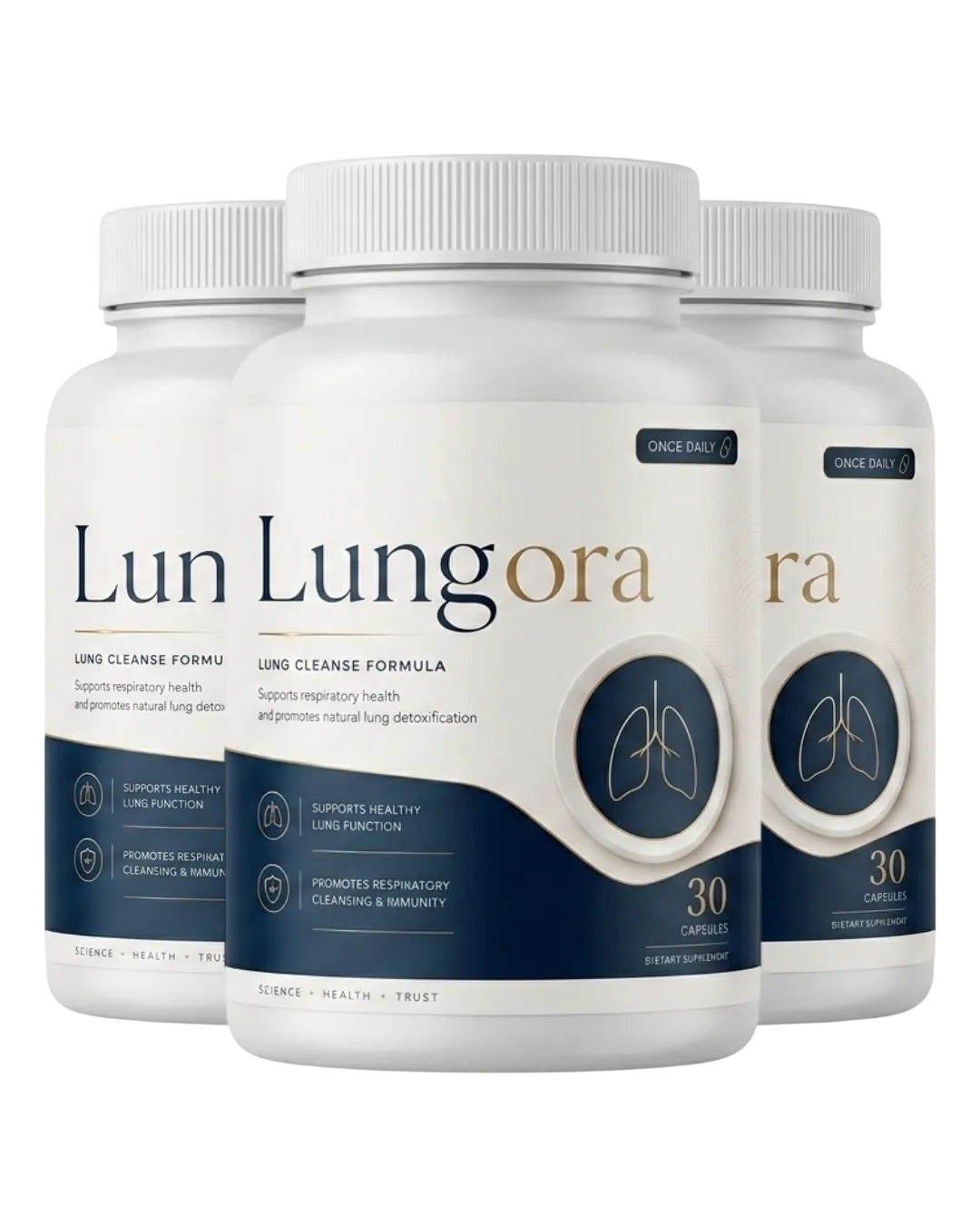
Lungora Official Website
per bottle on the 6-bottle pack · free US shipping on 3 and 6
Check Current Price 60-day guarantee · official checkout only